 Referral
 Points of sale
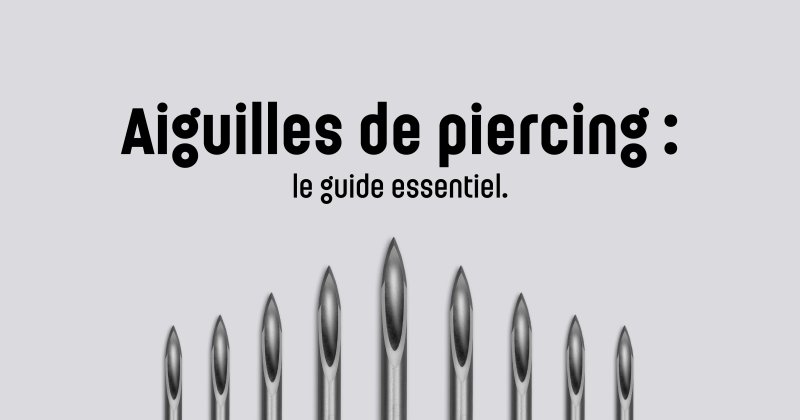
Understanding piercing needle sizes
The gauge measurement system
The gauge (G) system works in inverse proportion: the higher the number, the finer the needle. Here are the essential correspondences you need to remember:
- 18G = 1.0 mm diameter
- 16G = 1.2 mm diameter
- 14G = 1.6 mm diameter
- 12G = 2.0 mm diameter
- 10G = 2.5 mm diameter
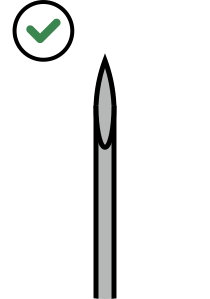
Kiwami Needles©, Japanese precision.
The sharpest blade on the market, finally sold sterile and ready to use — only at Ergo Piercing.
 Order a blade kit
Hollow needle vs catheter
You mainly use hollow needles that allow direct insertion of the jewelry. Unlike catheters used in medicine, piercing needles are designed to create a precise channel and facilitate the passage of the jewelry without additional trauma.
The quality of your blade is decisive: a well-sharpened needle pierces tissues cleanly, reducing inflammation and accelerating healing.
Needles for facial piercings
Nose piercing
For nose piercing, you will mainly use 18G or 16G. The 18G is perfectly suited for thin nostrils and first fittings, offering minimal trauma. The 16G is preferable if your client wants to wear thicker jewelry later or if their nasal morphology allows it.
The angled piercing technique, slightly curved to follow the natural curvature of the nostril, requires a perfectly straight and sharp needle.
Also read: Nose piercing kit: standards, best practices and suppliers in 2025
Lip piercing
Lip piercings generally require 16G to 14G depending on the exact area. The central labret is commonly done in 16G, while lateral piercings may require 14G for better jewelry retention.
Lip thickness varies considerably from one person to another, which directly influences your size choice.
Eyebrow piercing
16G is the standard for eyebrow piercings. This size offers the right compromise between ease of healing and jewelry stability. The anatomy of the eyebrow, with its relatively thin skin, does not require a thicker needle.
Tongue piercing
Tongue piercing imperatively requires 14G. This size is essential due to the thickness of the lingual muscle and the significant mechanical constraints (chewing, swallowing, speech). A lower gauge would risk creating tears or rejection.

Refer and save
Get 15% off for each successful referral.
Your referrals get 10% off their first order.
 Get my referral code
Needles for ear piercings
Earlobe
For earlobes, you can use 18G to 16G depending on the age and morphology of your client. The 18G is suitable for thin lobes and young clients, while the 16G is preferable for adults who wish to wear various jewelry.
Cartilage (helix, tragus)
Cartilage piercings are generally done in 16G to 14G. Cartilage being denser than skin, a 14G needle often facilitates piercing and reduces the risk of cartilage cracking.
For the tragus, its small anatomical size often directs toward 16G, while the helix can handle 14G without issue.
Industrial
Industrial piercing exclusively requires 14G. This size is imposed by the length of the straight bar that must traverse the cartilage over a significant distance. The 14G ensures the necessary stability and prevents migration.
Conch and daith
These thick cartilage areas are generally pierced in 16G to 14G. The conch, with its large surface area, handles 14G well. The daith, more anatomically delicate, is often done in 16G to minimize trauma.
Simplify the way you work:
with all-in-one equipment, ready to use, sterile and single-use.
Needles for body piercings
Navel piercing
14G is the absolute standard for navel piercing. This size is adapted to the thickness of the skin fold and the mechanical constraints related to trunk movements. It also allows the use of standard banana jewelry.
Navel anatomy varies enormously from one person to another, but the 14G size remains constant.
Nipple piercing
Nipple piercings are generally done in 14G to 12G depending on morphology. The 14G suits the majority of anatomies, while the 12G may be preferable for larger nipples or for men.
The significant vascularization of this area requires impeccable technique and a perfectly sterile needle.
Also read: Nipple piercing: techniques, anatomy and professional advice
Microdermal
Microdermal implants use 14G needles specifically designed to create a subcutaneous pocket. The technique differs from classic piercing and requires adapted equipment.
Professional selection criteria
Anatomical area assessment
Before each piercing, you must evaluate:
- The thickness of the tissues to be traversed
- The density (skin, cartilage, muscle)
- The vascularization of the area
- Future mechanical constraints
Adaptation to the first-fit jewelry
Your needle choice must exactly match the gauge of the first-fit jewelry. A mismatch between the two would create additional trauma during insertion.
Individual anatomical considerations
Each client has anatomical specificities. A particularly thick earlobe may require 16G rather than 18G, even for a first fitting.
Compliance with hygiene standards
All your needles must be:
- Sterile and single-use
- Individually packaged
- Checked before use (packaging integrity, expiration date)
- Disposed of according to DASRI protocols
Simplify the way you work:
with all-in-one equipment, ready to use, sterile and single-use.
Mistakes to avoid
Undersizing needles
Using a needle that is too thin is the most common mistake. It causes:
- Tissue tears
- Difficult healing
- Excessive bleeding
- Increased risk of infection
Failure to adapt to morphology
Systematically applying the same sizes without taking individual anatomy into account compromises the quality of your work. Each client deserves a personalized assessment.
Attempted reuse
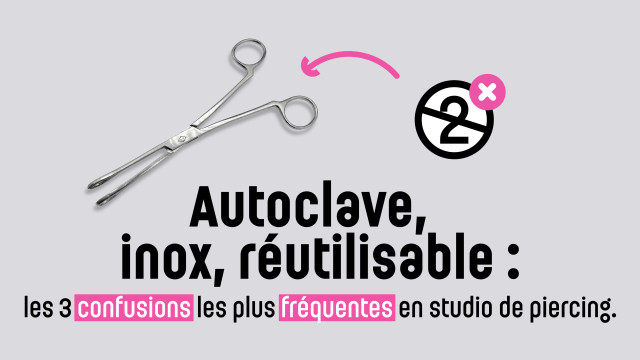
Piercing needles are strictly single-use. No sterilization protocol can guarantee their reuse without risk.
Neglecting quality
Saving on needle quality is counterproductive. A poor-quality needle can:
- Deform during piercing
- Create burrs on the tissues
- Compromise the precision of the gesture
Conclusion and recommendations
Mastering needle size selection distinguishes the professional piercer from the amateur. This skill is acquired through experience and continuing education, but relies on solid theoretical foundations that this guide has presented to you.
At Ergo Piercing, we understand that your professionalism depends on the quality of your tools. Our sterile disposable kits guarantee perfectly sharpened needles, packaged according to the strictest standards. Each needle is tested and certified to offer you the precision your expertise deserves.
Investing in quality equipment is not an expense, but the guarantee of your clients' satisfaction and the sustainability of your business. A successful piercing with the right needles means a satisfied client who will come back and recommend your services.
Remember that needle size is just one element in the success of a piercing, but it is a fundamental one. Combined with impeccable technique and adapted post-piercing follow-up, it directly contributes to the reputation of excellence you build every day.
Kiwami Needles©, Japanese precision.
The sharpest blade on the market, finally sold sterile and ready to use — only at Ergo Piercing.