 Referral
 Points of sale
Why a bump appears
A bump, called a keloid, is excess scar tissue. It often appears due to mechanical or chemical irritation.
The most common causes:
Jewelry too short or too tight
Repeated pressure or friction (pillow, headset, mask, clothing)
Too frequent cleaning or overly strong antiseptic product
Lack of drying or constant moisture (wet hair, perspiration)
Simplify the way you work:
with all-in-one equipment, ready to use, sterile and single-use.
 Order Ergo kits
What not to do
- Do not pierce, press or cut the bump
- Do not multiply disinfections
- Do not rotate or handle the jewelry
- Do not change the jewelry during the inflammatory phase
Every unnecessary handling perpetuates the irritation.

Refer and save
Get 15% off for each successful referral.
Your referrals get 10% off their first order.
 Get my referral code
How to react effectively
1. Clean simply:
Physiological saline morning and evening
Dry with a sterile pad (never cotton or tissue)
As a complement, a gentle antiseptic wipe (povidone or chlorhexidine 0.05%) once a day for a few days is sufficient.
2. Assess mechanical causes with the client
Is the client moving the jewelry without realizing it?
Are they sleeping on it?
How are they performing their aftercare? Too often? Not enough?
For women: are they leaving wet hair resting on the piercing?
These small details often make all the difference in healing.
3. Correct the jewelry if necessary
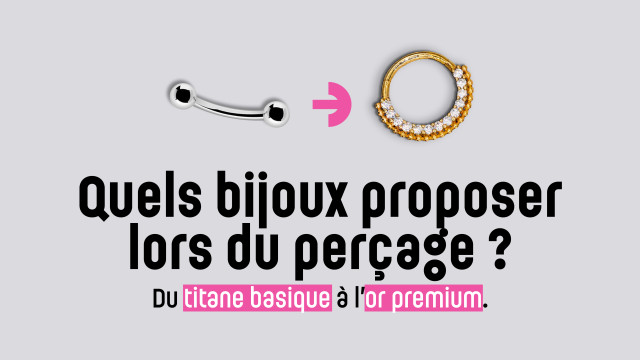
If the bump persists despite good aftercare, the jewelry is often the culprit. Prefer ASTM F-136 titanium jewelry, without PVD or gold plating.
- Raw F-136 titanium, neutral and biocompatible
- If possible, jewelry validated by the APP (Association of Professional Piercers)
- Otherwise, at minimum, jewelry certified F-136 by a reliable supplier
Also read: How to choose the right piercing jewelry?
The proper rebalancing protocol
- Clean simply (physiological saline + sterile pad)
- Eliminate all mechanical irritation (appropriate jewelry, pressure, friction)
- Replace with raw F-136 titanium if needed
- Let it breathe and observe for 10 days
The majority of bumps visibly decrease within one to two weeks once the cause is corrected.
Also read: The asepsis protocol for piercing
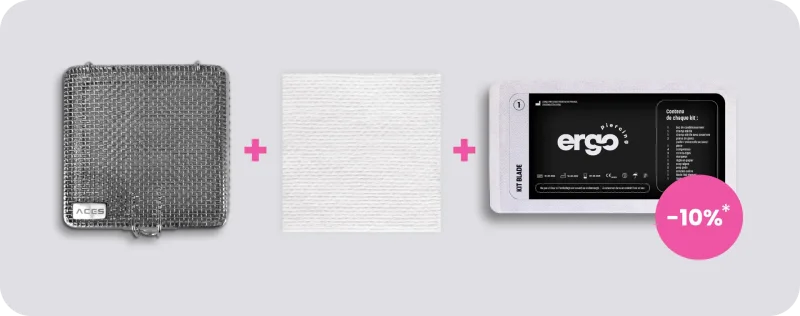
The ultimate Pro Pack
ACES x Ergo Piercing -10% on your Ergo boxAs a complementary solution: NO-POOL pads
For cases where the keloid remains visible despite everything, there is a gentle and effective solution: NO-POOL silicone pads. They are placed at the front and back of the jewelry to apply gentle and regular pressure that helps the bump gradually recede.
However, be careful: it is important to use only genuine NO-POOL pads, designed for this purpose. Copies and counterfeits, widely distributed by unscrupulous suppliers, are often of poor quality and can cause the opposite effect (irritation or maceration).
Good local hygiene
Appropriate F-136 jewelry
Regular follow-up by the piercer
In conclusion
A keloid is not a failure: it is a signal. The body is simply saying: "there is a small imbalance." The piercer's role is to investigate with the client, identify the cause, and adjust the jewelry or aftercare without panicking. With the right steps, quality titanium and, if needed, NO-POOL pads, the skin always finds its natural balance again.